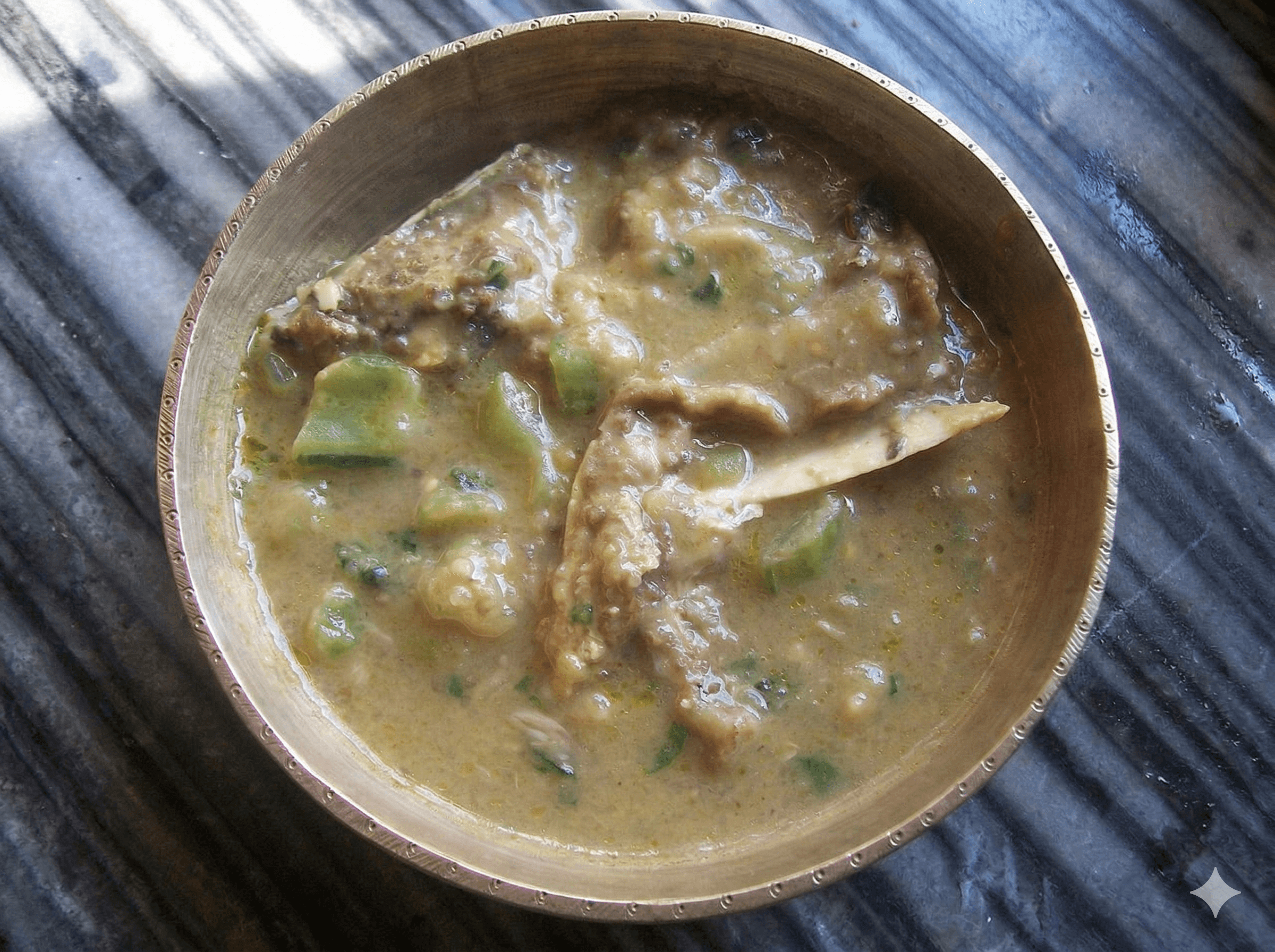
Khar
Guwahati, Assam, India
An ancient Assamese dish built around an ingredient found nowhere else in Indian cooking: khar, an alkaline filtrate made by burning the skin of a specific variety of banana (bhim kol) to ash, then filtering water through it. This pale, amber liquid becomes the base of the dish, into which raw papaya, pulses, or fish are simmered with minimal spices. The khar liquid gives the dish a distinctive slippery, almost soapy quality and a deeply earthy, mineral flavor that takes getting used to but becomes addictive. It's always served as the first course of a traditional Assamese meal (an Assamese thali begins with khar and ends with tenga, a sour dish). The banana peel ash acts as a natural antacid, and Assamese communities have used it medicinally for centuries. The technique of creating alkaline cooking agents from plant ash connects it to Mesoamerican nixtamalization and Chinese kansui noodles, yet these traditions developed entirely independently. Outside Assam, even within the rest of Northeast India, khar is virtually unknown.
Ingredients
- 1 mediumraw papaya (peeled, cubed)
- 0.5 cupkhar liquid (banana peel ash filtrate)
- 2 tbspmustard oil
- 2 tbsprice (washed, soaked)
- 0.25 tspturmeric powder
- 2 piecesgreen chilies (slit)
- 3 clovesgarlic (lightly crushed)
- to tastesalt
- 1 cupwater
Directions
- 1
To prepare khar liquid at home, dry the peels of ripe bhim kol bananas in the sun until completely brittle, then burn them to a fine white ash. Place the ash in a muslin cloth, pour water through it slowly, and collect the amber filtrate. Alternatively, use store-bought khar powder dissolved in water.
- 2
Heat mustard oil in a pot until it just smokes, then let it cool slightly.
- 3
Add the crushed garlic and slit green chilies, sauteing for 30 seconds until fragrant.
- 4
Add the cubed raw papaya and turmeric. Stir for a minute to coat.
- 5
Pour in the khar liquid and water. Add the soaked rice grains, which will help thicken the dish as they cook.
- 6
Bring to a gentle boil, then reduce heat and simmer uncovered for 15 to 20 minutes until the papaya is completely soft and the liquid has reduced to a thin, slightly viscous consistency.
- 7
Finish with a drizzle of raw mustard oil, adjust salt, and serve warm as the first course of an Assamese thali with steamed rice.